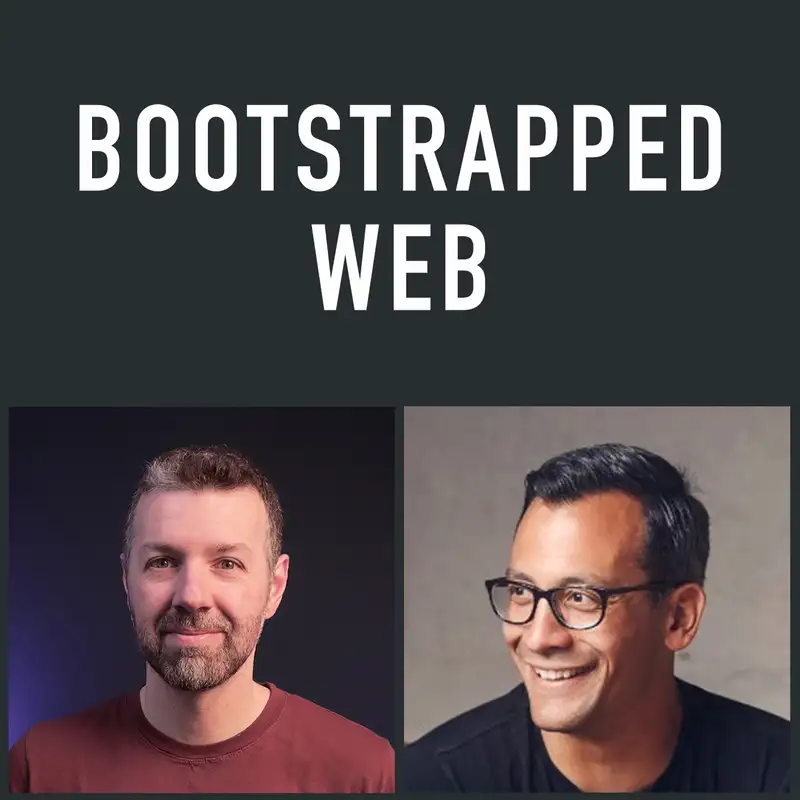
Cofounders - w/ Rob Walling and Ben Fisher
Hello, and welcome to another episode of Bootstrap Web. We've got another party round party episode today. Brian and I are joined by mister Rob Walling and mister Ben Fisher. And our nominal topic is, is cofounders, but we're gonna see where the conversation goes. So, yeah, Brian, why don't we you and I kick things off before we bring in before we bring in the fellas.
Brian Casel:Well, you know, I'm I'm looking forward to this one as as we talked about earlier, we've got, you know, a whole lineup of guests over the next few weeks and today we've got a got a party episode for sure. You know, Rob and and Ben, welcome to the show. Ben, I don't think you've been on before, but of course, you know, Ben, you're the co founder with with Jordan of Cartoke. How's it going, Ben?
Speaker 3:Yeah. I it's going great. Thanks for having me, guys. I will say I I I'm remembering, I think you at one point, there was an episode talking about how Jordan and connected. So my my names came up, but I my voice is never
Jordan Gal:Yes, Ben. If you feel the need to clarify certain lies, disrupt the meta stuff.
Brian Casel:Yep. And of course you guys all probably know Mr. Rob Walling. Rob, how's going buddy?
Speaker 4:It's going great. Yeah, thanks for having me on. It's, always a pleasure to be on the show. I think this is maybe my third time on. Yeah.
Speaker 4:I think because I think you were interviewed me in the the pre Jordan days and then I came on one time to talk about, like, bootstrapping or something. And so it's kinda cool to be, back on the show, other side of the earbuds. You know?
Brian Casel:Cool. So, you know, yeah, I I think it'll be interesting to talk about cofounders a little bit today. I think we've all gone through different iterations of that and, you know, different experiences there. So I'm sure we all have a lot to ramble on about about that. But, you know, why don't we talk a little bit about, you know, the recent happenings with drip and lead pages?
Brian Casel:I'm sure that's that's on people's minds right now. So, I mean, Rob, why don't you I mean, obviously, you've you've shared a lot on your podcast and and on, you know, Zen founder as well. A of lot good stuff there for people to dig into if you haven't already, but, you know, where are things at now, like today? Like, sounds like you're you're past all all the big the big changes, I I think. What are we in, you know, late August?
Brian Casel:So why don't you give us a quick update right now?
Speaker 4:Sure. Yeah. So for those, you know, who who aren't aware, I bootstrapped an email marketing automation company called Drip to to seven figures with my co founder Derek. And then we were acquired by Leadpages about seven weeks ago. So I guess I can just start saying two months you know it's like when a baby's really little you're right two weeks three weeks that's how I've been thinking the employees were given a choice of whether to relocate or to stay where they were we were most of us were in California but a few of us were distributed you know the founders agreed upfront to move so we we've relocated to Minneapolis just about a month ago and I can see you know you can imagine how many things could go wrong with this kind of thing and how you could easily break like break a company or ruin the magic, and they have been extremely deliberate about not doing that like Clay Clay the CEO of, of Leadpages just keeps telling everyone kind of like let's not let's not touch these guys you know let's let them let's let them do their thing let's give them more resources let's give them more more money to do things and hire but, overall I've been really impressed with with how they've handled it and I'm not just saying that because I now work for lead pages like it's genuinely you know if things weren't going well I would be heeing and hawing and talking around it like I'm just genuinely been pretty impressed.
Brian Casel:Yeah. That's pretty cool. Like, what what are some of the big bigger things that that are now possible that weren't necessarily possible before? Like, some things that are are happening that you guys are working on right now in in drip inside lead pages.
Speaker 4:Totally. I mean like, yeah, a couple examples like, you know, within the first week or two, we launched a $1 plan which is basically, it's almost like a free plan. We put it at a dollar just to ensure we have a credit card so that people don't you know spam us or use us for spam and that was there was just no chance that we could afford to do that as as a self funded company for a bunch of reasons one of which the trial volume just shot through the roof. So support shot through the roof and here they just gave us three more support people. You know, we've had one guy, Andy, probably all emailed with him.
Speaker 4:Andy's like our, he's our support guy. Yeah. He And escalates everything. Well, now there's like four and maybe even five and we didn't have to go out and hire. We didn't have to find.
Speaker 4:We didn't have to train. They just magically appear and then start supporting. I mean, it feels like that. It's just magic when that happens. That's been the best part is like ops stuff, which I think most of us are product people.
Speaker 4:Yeah. I know Jordan, you're more, you know, focused on sales. Brian, you think about process. Ben, I'm not sure what your magic power is. I guess it's like what's the technology it's the technology and the product, you know?
Speaker 4:But like ops, I don't think is any of our favorite stuff or at least certainly not mine. I'll put it that way. And, that's what they're able to really help with. So we did the $1 plan. We did and, you know, that killed, like, $22,000 of MRR because everybody got people under you know a 100 contacts got downgraded.
Speaker 4:So just wipe that right and just basically lost MRR and that was a decision you can't make. You just can't do that as a you know. Yeah, I would that would not be good so you know but they're able they're able to handle that and then another one was like they doubled our affiliate commissions so again something that we just didn't have the funds to do and then we have four I hired two people in the last year and we we have four open job requests right now. So we'll probably hire four people on the next sixty days. I'm just new, three of them are developers.
Speaker 4:So it's that that's the kind of stuff. I mean, there's a bunch of features and stuff I can go into that we're building, but it's those are the the needle moving.
Jordan Gal:The thing that I noticed, Rob, is the freaking speed. Like, I'm I'm I'm a customer driven. I'm on the I'm on the list, and, you know, I've liked your Facebook page. And just just over the past few weeks, there's just so much activity. Now there's a new webinar with Clay and Anna and then there's like the dollar trial and then there's a new course on how to use marketing automation and build sales funnels.
Jordan Gal:It's just like, I mean, within a few weeks, it's just cranky.
Speaker 4:Yeah. They they are I mean, bottom line, this company, Leadpages, one of the best in the world at marketing, at like, especially top of the funnel, but their whole funnel analysis is great. But just just in terms of SaaS marketing, I'm blown away. Like, the folks are professional lifelong marketers. This is what they do.
Speaker 4:This is all they do. This is what they think about. And they are at such a higher level. I don't know if you've guys have gone to getdrip.com in the last forty eight hours. Totally marketing website with a look at the video at the home.
Speaker 4:It's like professional. I didn't do any of that. I showed up and read off a teleprompter. They all, they wrote the copy. They came up with the, it's that kind of stuff where it's like, wow, you just, you couldn't put that together as a bootstrapper because you'd have to hire, they have two like professional videographers on staff, you know, who and then they had a professional, you know, writer who did it.
Speaker 4:Click him up with the concept and then we went from there. It's a funny video actually if you get a chance to watch it on the drip homepage. It's and watch it at least thirty seconds in and then you'll start to get the get the thing but that's yeah. The the speed of execution and that but part of the speed of execution is the amount of resources they have outright. There's a full time person for everything.
Speaker 4:And you think of, I need a designer to design an infographic. Oh, yeah. We have a full time person for I need someone to write text for, you know, kind of this commercial video. Yeah. No.
Speaker 4:We have full time person. It's just like, this is incredible. You know?
Jordan Gal:So it looks awesome if you're on the right side of the war. If you are on the other side competing with that, it's a little daunting. It's a little bit like, how how can you compete with that? You know, how do you look at that and still say, yeah, sure. I'll I'll go up against that because I have at least a chance to win in this niche or that niche or in this way or or another way?
Speaker 4:Well, I mean, I think you have to think about what space you're in and look at your competitors because the, you know, Leadpages unique strength and what they're the best at is marketing. And so would I start a landing page company and try to out market them? No, you would be insane, especially with less money and less experience. But could you start a, you know, what if what if your competition, let's say Infusionsoft, what was their big kind of unique thing? They're really good at sales and they had a head start and a brand name.
Speaker 4:So you don't compete with either of those. What you do is you build the better product and you move faster than them. And even without the funding that they have, because I think they've raised 50 or $100,000,000. So they also have the funding, but they don't exit their marketing is not nearly as good as Leapages. So you don't I I feel like you can out market them different in ways.
Speaker 4:You know what saying? It's like which what are the weaknesses of that funded competitor?
Jordan Gal:Right. You need to pick. You can't just feel like I'm just gonna do everything and also make great video and also have a podcast and also do this. Correct. Gotta pick.
Jordan Gal:You gotta pick.
Speaker 4:Because because we got it. Yeah, that's right. Because we got as far as we did, you know, at bootstrapping a SaaS app into some figures. We got as far as we did in a really competitive space where almost everybody else has funding. And we just picked the right battles, I think.
Speaker 4:We were good enough. Like we did have videos on the, you know, on the old website and they were good. You know, they were, I mean, it was me sitting at home, editing the thing, not near this professional, but it didn't matter because we had everything else. We did everything else right. You know, we had the early influencers, we had a really good pro or have still have a really good product.
Speaker 4:And so there are these other battles you can win that, that can kinda get you ahead even if other folks have funding.
Brian Casel:You know, have one question. I don't wanna, like, kinda rehash the whole sales process. You went in in-depth on that on on your podcast. But I guess one thing that I've I've been kind of wondering about, if you go back a few years to to the time when you were kind of starting DRIP, what were some of the assumptions about starting a SaaS from from scratch? Obviously, you know, this is not your first rodeo.
Brian Casel:But, you know, going into that those first couple of years of Drip and then, like, kind of looking ahead to to what might happen with Drip, I mean, what were some of the assumptions that that maybe didn't pan out the way that you had expected both positive and negative? I mean, like, you know, one one thing that Jordan said coming out of MicroConf Europe was the overall theme seemed to be that SaaS is is hard even if you're even if it's successful. I I guess, like, any thoughts on that?
Speaker 4:Yeah. I mean, SaaS, especially in a competitive space is hard. I think SaaS in a less competitive space is is has been less challenging for me personally. The reason SaaS gets hard especially is if you're going up against funded people is because you need to then build a company, you need to hire people, a lot of people. And I think some assumptions were especially coming off of Hiptail which is basically a SaaS app that I had.
Speaker 4:It was just me and a couple contractors. When we started, when we were ground on drip, I thought it was gonna be this nice little, you know, let's say it's somewhere between 30 ks and a 100 MRR and we were just, it was just gonna be Derek and I and we were gonna hire a few contractors to help us support and we're gonna coast along, not coast, but just do the thing I've always done, which is really build lifestyle businesses. And it quickly turned into not that, you know, it was the opposite. It was basically, if we do not hire fast, think about this all the time, push hard, compete, ship features, market the hell out of this thing, we're gonna get destroyed. That's what it became.
Speaker 4:And so that was an assumption that I think, you know, was it was an awakening for me. I think another one, I mean, I talked a little bit in Microsoft Europe about profitability and how, you know, Drip was it was a fast growing SaaS app that was profitable, but it wasn't, you know, fast growing apps aren't super profitable, overall because you you tend to just take all your revenue and invest it right back into people. And so, you know, every month we'd grow and I'd hire another person to kind of help with something else to move faster. And you kinda, you can pull profit out. Mean don't get me wrong but if you really want to maximize growth which is the point that we that I hit you don't you're not gonna be making a ton of money as you're growing.
Speaker 4:You really are kicking the ball down the road saying we're either gonna get acquired someday we're gonna go public or we're gonna just reap you know mad cash later once we plateau. I mean that's that those are apps that are profitable right as you kind of level out you become really big and then you pull it up. So that was another assumption I think in the past all of my apps I've taken a lot of cash out of and DRIP wasn't particularly one that I took cash out of. I just kept reinvesting or, you know, we kept reinvesting and reinvesting and reinvesting.
Brian Casel:Yeah. It's interesting. I I just feel like a lot of people are so attracted to the idea of of SaaS and the recurring revenue aspect. In the early stage, it's it's easy to overlook. Okay.
Brian Casel:How how difficult will it be to make it a viable business that could actually replace my salary or or whatever I'm doing before this? And then even even once you pass that milestone and you get some traction, you get a little bit successful, then it's like, okay, we need customer success people. We need more developers. We need, you know, more marketing and, you know, it's yeah. You gotta really grow it out.
Speaker 4:Yeah. It it does depend on the business, because, you know, you look there are a lot of smaller SaaS apps that really are nice lifestyle businesses. I mean, Hidtail was one of those where it was me, couple contractors, and it was doing 25 k a month MRR, expenses were like 5 k and and that was it and there was no direct competition it was not this Red Ocean thing you know where so it's kind of like it depends on the market depends on how fast you're growing if you want to reinvest but there are and you know you look at you know Amy Hoy's freckle is like that it's a really good you know again lifestyle business I don't say that in a negative way it generates a lot of you know profit for them and they're not feeling like they have to hire you know 10 or 20 people so I do think there's it's kind of knowing what you're getting into and even knowing like how how mission critical is your app because if it's really mission critical then your churn is going to be low which sounds great but then it's mission critical so it can't go down so now you you do need staff to keep it up.
Speaker 4:So there there are these trade offs.
Jordan Gal:Doesn't doesn't make you question if SaaS is the best business model if you're gonna bootstrap.
Speaker 4:Yeah. Well, I mean, certainly early, you know, if if you're early in your career, I've said this a lot, like, I think you need to get skills doing something else, like either launching WordPress plugins or info products or just something to learn how to copyright and market and, get a little bit of cash under your belt and experience launching products. I think launching SaaS as your first product is a really, really tough bet these days.
Jordan Gal:Yeah. Why don't we transition into into into some co founder stories or background or just people's different different takes on working with themselves. First, we have we've got four of us on here. Brian, you you do not have a co founder?
Brian Casel:Right. Today, don't have a cofounder. I I have some experiences, I guess both good and bad from past projects and things that I could talk about, but it's I think it's interesting for for the three of you. Yeah. I mean, Jordan and Ben, you you guys are are cofounders and Jordan and Rob, you guys are similar in that, you know, you both started your company's solo and then I don't know if it's the right way to say this, but like you brought on the cofounder a little bit down, you know, down the line.
Brian Casel:So it's interesting how that transition happened.
Jordan Gal:Yeah. At least at least our our story on on the Carthook side, it's actually closely related to what Rob was just talking about on the difference between if you want to have a lifestyle business which I don't even know why we keep prefacing that we're not saying that in a negative way. It should be looked at it should be looked at in negative way in any way. But it's almost like I thought Karthoek was gonna be that. I thought just me and a few you know, I had one developer cofounder that I kinda start off with, but he his intention was always to be passive in it once the thing got built.
Jordan Gal:And I really just wanted to run it with me and a few VAs and just let cash come out of it. And then when that kind of didn't pan out, I almost needed to like go legit and actually build a company and that I couldn't do by myself and I needed Ben for that. So it was like try to go one direction and it just didn't really work out that way and then to actually admit, okay, this needs to be an actual company, that's when I I needed a co founder because I didn't have all all the skills.
Brian Casel:Yeah. I mean, like today, my my thinking on it is that not having a co founder, being a solo founder is really, really challenging sometimes. Just making decisions and not having somebody who's kind of on the same footing as I am to to bounce ideas off. Obviously, I I rely heavily on my mastermind groups and and advisers and friends and things. But that's always just been a challenge as a solo founder.
Brian Casel:But it's also just as hard of a challenge to find a co founder that really has the chemistry and the longevity to really work out. At least that's been my experience. I really like collaborating with people on, like, side projects. Like, Jordan, you and I on on this podcast. You know, Brad, Tunar, and I kind of, have been organizing this annual big snow tiny conf thing together.
Brian Casel:You know, little side projects like that. Right right now, audience ops for the foreseeable future, you know, I'm I'm solo on it and and I'm and it's it's challenging sometimes, but it's working out that way. But, yeah, like, in in the past, I I found that I rushed in too quickly with cofounders, and then it either fizzled out or just didn't work out for various reasons. There was a time a few years back when I felt like I had to, find a cofounder. And and then, you know, a few years down the road, I I learned, you know what?
Brian Casel:I can I could go this thing solo and and see where that goes? So, I guess I'm I'm still a little bit torn on it a little bit.
Jordan Gal:Yeah. I think it depends on your personal experience. You kinda have to get a little lucky. My feeling on it, I I assume Ben's going to agree. I assume Ben doesn't feel unbelievably unlucky that that he ended up with me.
Jordan Gal:So I think we we kinda got lucky. But Ben, you've you've seen a few different scenarios. You you worked with a few co founders and it it didn't work out and then Mhmm. And then you joined you specifically said to yourself, I I want a co founder, but but you had like much stricter requirements.
Speaker 3:Yeah. I think I I and actually, Brian, the approach that eventually I mean, wouldn't even say if it was approach, was more just those like kinda like dating is a you know, varying levels of success and failure with the partnership aspect. And I think the relationship with the partners often overshadowed whatever success or failure there was on the business end, quite frankly. I basically became a lot more, I think, intentional around trying to figure out how can I objectively look at someone on the marketing or sales end? Because I'm not a marketer, that's certainly not my strength at all.
Speaker 3:In fact, that's really but I was like, how do I find someone who is really good at something that I'm not necessarily that well versed in myself? And so, ultimately, what I looked at was like, would do small side projects like Brian had also it sounded like that was similar to your approach. I spent almost a year before jumping into another actual partnership, just trying to collaborate like collaborating with people and testing the waters and the relationships. And ultimately, I looked at or was looking for is what success what are the marketing skills that someone has demonstrated? And part of what a big part of what I looked at with Jordan or what I what was really I really liked was what he did with Cardhook, but also with previous you know, his previous business, They had sold the ecommerce business, was Jordan had a direct responsibility in in the marketing.
Speaker 3:And so I think that was that was a big part of it, and that was you know, it worked out this time, which is I feel very thankful for.
Brian Casel:Yeah. Hey. So, like, Jordan, like, on on previous I forgot what number, you know, probably over a year ago, you you went through the whole process of how you found Ben and and you you know, people can go back and and hear that from your perspective. But Ben, I'm curious, like, when when you first heard from from this guy, Jordan Gao, like, what were you think like, what what were you thinking? And then and then how did it go?
Brian Casel:How how did you get to the point where I was like, alright, this this guy's legit.
Speaker 3:I mean, it was very unassuming. It was very, like, sort of a great, like it's like we didn't we didn't start off by dating. I felt stuck trying to figure out what my next business or project or whatever was. What I knew is I didn't wanna do it by myself, quite frankly. I wanted a partner.
Speaker 3:I also knew I didn't wanna jump into a marriage. The the the parallels with dating here are just like are are uncanny. I joke that Jordan is my business husband. I
Jordan Gal:remember in the episode that I talked about it, well, I use it so often, was like, okay, I'm just gonna stop calling it like marriage and engagement. But but it is. That that's
Speaker 3:It is. But in any case, so I'd come up with a I was explore I knew I wanted to be in e commerce. I've always liked b to b. I like charging for things because it's simple sort of metric to determine how much do people value it, at least for me. It just seemed like a simple simple way.
Speaker 3:So I I basically I was looking in ecommerce and a friend a mutual friend, or actually a friend or a friend of ours pointed me at CartHook. So initially, signed up for for CartHook to sort of reverse engineer and look at it, because basically my friend was like, this guy's doing something kind of interesting, there's some parallels with the product that you're exploring yourself. And so, signed up initially just to, you know, spy.
Brian Casel:Oh, so you were thinking about doing like an e commerce product Yeah.
Jordan Gal:For
Speaker 3:you? I'd I'd built a one a one click buy button for email marketers. So the idea was that if you're an existing customer, you can literally you can embed a buy button for whatever you're marketing in an email. Yeah. And then that person could could literally purchase it with a click, but not having to provide their credit card information.
Speaker 3:And so I went in, I signed up, and then in sort of typical or now typical Jordan fashion, he, you know, he stalked me. And he came across an investor deck from my previous company where we had raised a bit of money. We actually sold that business. We we published the investor deck and basically Jordan emailed me and was like, Ben. Thanks for signing up.
Speaker 3:I actually was taking a look at your investor deck. I feel like CartHook's in a very similar place of whenever you guys made that made that deck, so I'd love to just pick your brain. And so that just led to, like, a really friendly conversation. We talked, and then I think it was, like, at the end of the conversation, Jordan was like, I don't know what you're up to these days, but, you know, maybe there's we should talk a little bit. You know, like, like, are you interested in potentially working together?
Speaker 3:And so for me, was like perfect timing because I was trying I mean, I'd I'd literally spent like the previous nine months building projects and killing them and trying to find someone that I really wanted to work with. And so then Jordan was had, I guess, a bit of a serious conversation just around like hopes and dreams, and he offered to fly down the next day. I I was I was in Los Angeles at the time, just some friends and I, who also run tech companies, do a bit of like a month long mastermind where we share a house. In Los Angeles while it's really cold in New York City, which is where we live or I live. And so Jordan flew down from Portland, Oregon to meet in person for like three or four days, and we just talked and discussed the product and discussed the vision and just it was very intense.
Speaker 3:It was like, you know, going to Mexico on a first date.
Brian Casel:Yeah. I guess, know, Rob, I wanna hear your kind of background with with Derek a little bit. But from what I what I understand is you guys started like, he started out as a contractor or an employee and then turned, equity partner. Is that right?
Speaker 4:Yeah. That's right. So I made the transition as a he was was first a contractor, and then he contracted I'm trying to even think it was like just a few months and then he said, hey so I'm getting married I need to buy a house and really as a contractor it's hard you know you need years of history so could you move me to W 2 and I was like yeah why not and that's that's the only reason I had never really had an employee aside from myself, you know, before that. And then it just became pretty obvious later on that like he was such a pivotal piece of the product in so many ways and it just didn't make sense for him not to, to have a stake in it. I mean, I think it's obvious from what we're all discussing here there's like two, it seems like to me like there's two factors here.
Speaker 4:There's personality fit which probably entails a lot of things like communication and work style and that kind of stuff. So personality fit and the second is skill set, right? And it's like is their skill set complementary to yours rather than heavily overlapping and is their personality one that you can work with much like you know, the dating analogy? Is this, you know, mean, that's what like, you know, job interviews are all about finding those two things right, you know, as well. But you're not giving someone 50% of your company, know, or a certain percentage of your company or whatever, whatever it winds up being.
Speaker 4:And so I think you can do that like, you know, Ben and Jordan went about it really intelligently. From what I hear most people do, they kind of meet somebody at a, you know, a meetup or they meet someone one or two times and suddenly they're co founders. And that always seems like, how do you know, how do you know that there's what their skill set is? How do you know what their communication style and personality is? And I've found that all three, you know three essentially business partners that I've had one is Mike Taber right with MicroConf and the Academy.
Speaker 4:And then I had a guy with dot net invoice named Jeremy. All three of those guys I knew for years before we went into business together including Derek. Had known him for two, three years before that. And I'm not saying you have to do that but that's for me has been kind of the successful way is to suss out their skillset and their personality. But Ben and Jordan, when we're able to crash course it, right?
Speaker 4:They basically sussed out each other's skill sets and personality in a matter of months but they did it in a very intense way Where it's like, I'm gonna fly and you and I are gonna work from the same place for five days. Or you know, whatever it is. I mean, that's another way of doing it. I think it's kinda a unique and well, it's a very Jordan esque way of doing it. That's how I think about it.
Brian Casel:I I really, I really agree with the the approach of, you know, just starting with a friendship or or working history. You know? I mean, like, and I were in a mastermind group together for, like, two years before Bootstrap web. And Brad Tunar, who I worked with on the on the conference, you know, he and I actually, he was a contractor that I had worked with for for many years doing, like, web design stuff. Yep.
Jordan Gal:Ben has a really interesting cautionary tale of being of being thrown in. Ben, why you talk about that experience? That's like the
Speaker 3:the Wait. Wait. Wait. Which one?
Jordan Gal:When you you started a company during like a hackathon weekend.
Speaker 3:Oh, yeah. Yeah. Well, that's how Lean Startup Machine, yeah, came together. I've done and and to talk about just the way that Jordan and I incidentally approached this was largely based off of several instances where I jumped into relationships. Or or and I I again, and I say this is like I was an active contributor to, you know, whatever dysfunction or whatever.
Speaker 3:Like, it's a two way street, like any relationship. And so I'm not you know, I say this from a perspective of like I was talking to Heath and Shaw about this probably three years ago, and one of the comments he had said to me was, you know, he was basically like, Ben, you need to look at yourself too. And I think he probably said it in a more direct way than even that. And and so I've spent a lot of time thinking about that. But, yeah, you know, like we realized we were better off in that case with like, didn't start a machine.
Speaker 3:We met for you know, we basically realized we enjoyed working together at a Startup Weekend hackathon, and we wanted to have more of we basically approached Startup Weekend initially, we're like, hey. We'd love to have more Startup Weekends in New York City. And this is, like, probably 2009. So we were all recent college graduates. And, basically, Startup Weekend was like, well, no.
Speaker 3:Like, we get approached to do events all the time. We don't know you guys from Adam. You're welcome to go do your own thing. So the people we literally, for the members of our Startup Weekend team, we met up for drinks and we're like, what other is there a way for us to approach a hackathon in a different way? Came across Eric Reese's blog, and then, you know, Trevor reached out to him.
Speaker 3:And long story short, we, like, had our first lean startup machine event in New York City, like, literally three and a half weeks later. Initially, it was just like a side project, and then we kept doing more and more events. The whole lean startup space became relatively mainstream. Again, it wasn't like overnight, but Eric's blog became bit like bigger and bigger. Yeah.
Speaker 3:It got to a point where we realized Lean Start Machine as an event and as an organization, there was huge demand, but I think internally, you know, we kinda jumped into a marriage or a relationship, and I ultimately made a decision for me. I was like, you know, we're we're our own worst enemy, and so I went off to to start another company. And, you know, they they kept going forward with with it, and they've done an awesome job.
Brian Casel:Yeah. Can can all you guys talk about, like, decision making process between you and and your cofounders? Like, how do how do you guys think about that?
Jordan Gal:Yeah. Rob, I'm curious if you and Derek have I don't know how you guys have it. You know, Ben and I have become personal friends through working together so much. And so once you become personal friends, it's very it's very strange to have, like, a boss and, like, one person who, like, makes the decision. So we we try to separate into, like, spheres.
Jordan Gal:Like, oh, the marketing and, like, strategy and stuff, Jordan has the final say, but on on other things, Ben has the final say, but we we've definitely we've we've had to work that out on who, you know, who makes the final decision, and is there such thing as a final decision, or is everything a collaboration? How how did you and Derek do that?
Speaker 4:Well, off, think the way you do it is really good to basically divide it based on your strengths. That's how you see Heat and Sean, Neil Patel doing it. That's how I see the successful, you know, folks in general doing it. So Derek and I, we make a lot of, we're pretty collaborative both of us and meaning we discuss things, we tend to throw things on a whiteboard, really hammer things out and try to find the best solution and then try to, I guess I tend to feel like we just are both seeking the right answer rather than we don't even remember or care whose answer it was, right? With that said, there are certain things that, I mean, if we're gonna make a technology decision, it really, we will talk it back and forth.
Speaker 4:And if no one feels strongly, I will eventually make a decision but pretty much one of us always feels strongly about it, you know? And in terms of more operational and marketing I've tended to just say here's what we're gonna do what do you think? I mean I always like ask do you have an issue with that? I run a lot of stuff by them but in general I think we're pretty collaborative. But but we do we I think we do separate it, like like you said, where either of us has our areas of expertise.
Brian Casel:You know, like, here as as like the solo founder, I'm I'm I'm I mean, I'm probably, jealous of all of you guys to have someone on your team who's invested in your business to be able to push back. Right? And to be I think it's good to have some fights and some pushback on certain decisions. I mean, I'm constantly seeking that and it's and it's like nowhere to be found when when I'm the only person who owns this thing. And so, you know, I've I've relied really heavily on mastermind groups and advisers and that sort of thing.
Brian Casel:And maybe too heavily on, like, my wife and and people who are just not interested in hearing me drone on about stuff. But can you guys talk a little bit about that? Like, it or and I guess if you had to compare it to your experiences being a solo founder, what what are your thoughts on that?
Jordan Gal:I mean, what it makes me think about is is the hesitation that people normally have with a co founder, and and the normal things that come to mind first don't actually end up being an issue. Like, you know, a lot of people think, but I'm gonna give away a large chunk of my company, you know, which is basically saying, I'm gonna give away a lot of money that I should own personally to somebody else. And that has just been not even close to the truth because it just wouldn't be where it is and it wouldn't get to where it's going to get to without Ben and without the the co founder relationship. So the the real worry that not downside, but like the danger is just the personal. Like if you if if you can't get along personally, you have a lot of trouble, a lot of friction, it screws up the whole business.
Jordan Gal:So that is almost the danger. That's what it makes me think of in like the co founder relationship. What people normally think of like giving away a piece of their company, giving away control, that I haven't found to be much downside. It's the the the advantages you gain from the areas of expertise that you're not good at, and the energy, and just the skill, just the amount that you could push something uphill vastly outweighs that. The real danger is in like, it's a fragile relationship and you can't ignore it, and you can't take advantage of it, you can't take it for granted.
Jordan Gal:So that for me ends up being like the focus of what it means for the company to have a co founder.
Speaker 4:I agree wholeheartedly with the giving away the equity pieces is just, yeah, I think it's overblown. I think the one exception I can think of to that, and it is more edge case y but if you really are gonna build like a business that you think is gonna do $10.20, $30 a month and then it's gonna stop and plateau which there are markets and businesses that are really designed to be that. If you're gonna start a few WordPress plugins or you're gonna have a small little SaaS app, then if you do give someone half, you're genuinely giving away a ton of like monthly cash. And so that actually does amount to like, I could live off this or since there's two of us, neither of us can live off it. It actually can make a difference.
Speaker 4:But aside from that, like if you're gonna grow this thing into whatever, again, it's a mid 6 figure or 7 figure business. It just doesn't really matter that much.
Brian Casel:Yep. And if you're gonna grow or even early on, I mean, in my experience when I have worked with co founders, I mean, the speed. You get so much more done much faster and you can just move forward on things, especially when you have that a good balance of skill sets, which I've had I have employees and contractors and obviously that helps us move a lot faster than than when it was just me, but I don't know. I I think somebody on the partner level really helps to accelerate things.
Jordan Gal:Yeah. Same with the motivation and the accountability. Like Ben and I, we're we're in. Like, we're not just gonna look at this and be like, oh, you know what? I'm kinda losing steam on it.
Jordan Gal:Maybe I'll move on to the next date. It's like, when you remove that from the world of possibilities, you do a better job focusing and being motivated on one thing.
Brian Casel:So what else? Any other any other questions, thoughts on this?
Speaker 3:One unique thing, at least from my perspective, I'm trying to think about it's
Jordan Gal:like I'm going back to
Speaker 3:co founders or whatnot. I'm very verbal. I'm a verbal thinker. I'm the son of two psychologists, so like, I think that, you know, there's a lot of feelings in talking, and for me at least, Jordan is one of the first people that I've just collaborated with where I think he's a he is very receptive in our communication. Like, we can we can I've never been able to fight with someone like this where it feels like constructive.
Speaker 3:And I wouldn't even necessarily say they're fights, but you know, we can get very heated and very passionate about it. But like, I've never ever felt that there was any sort of disparagement or even in in spite of the intensity, and I think that that's going back to like the marriage relationship analogy is is and now I'd be curious Jordan, your perspective on this is, but at least for me that's been a huge part of why what's worked in this relationship with me is that I'm able to talk through things with Jordan, and he can push back, and it's just very productive.
Jordan Gal:Yeah. And I think that's part of that is like, just is treating the whole relationship with respect, because you can screw it up. So if if you if you go a few weeks being a jerk or not being sensitive or or ignoring what the person thinks or or, you know, not respecting the other person, it's hard to get it back. Rob, the relationship with Derek, excuse me for saying this, but you're a lot older. Has that helped in in in being Ben and I are closer to equal, so we kinda have to dance around each other more delicately?
Jordan Gal:I think it would be easier if so it's like a ten, fifteen year gap between the two of you. It it might be easier to have like the boss employee relationship.
Speaker 4:Derek and I have known each other now for three or four years. We were friends who met in in person Mastermind in Fresno for years before. We've probably known each other maybe for five years now. I've never viewed our relationship as like employer. I actually, to be honest, you'll never hear me say the word employee about any of my people.
Speaker 4:I always say I work with Anna, I work with Andy, I work with Derek. And I'm not saying that to be some kind, know, a big company could say that because it's like we have our colleagues or you know, our associates. No one's an employee. But yeah, but I genuinely, that's how I think about it. Like I think we all work together in like a collaborative thing.
Speaker 4:And so Derek, I've never felt like I'm somehow, maybe when Derek was a contractor and then an early employee but as soon as we were, you know, we were knee deep in this it was always like what is the best way to get this done you know and so I think every once in a while we realize we'll I'll make a joke about you know watching the last episode of Seinfeld in college or watching the last episode of Friends you know in this hot tub at my house in LA And Derek's like, yeah, I was in fourth grade, you know, or something like that. You're like, yeah, is a huge age difference. It does not come up in day to day and I don't think either of us really think about it. So perhaps being, know, since I have done other companies and had startups in the past and I have more experience, I think it does make it a little easier for, I'm more confident. I'm really confident in my decisions but Derek is also pretty, he's only opinionated, we're both only opinionated strongly on a small bandwidth of things.
Speaker 4:Know, if you look at a 100 checklist or whatever, a 100 scale, there's like five points that I'm really opinionated on and he's really opinionated on five and they don't overlap. And everything else we're always kind of like, well, don't know, what do you think? Well, I don't know, what do you think? And then we would kind of find the right answer and then, you know, make the decision and move forward. I do tend to make the recommendation.
Speaker 4:I'll often say, well, here's what I see as the best thing, but everyone shoot holes in that and tell me what you think. And if we don't find any holes, then, yeah, I did propose it. And then in the end, I'm gonna implement. But I didn't come in with an edict of like, you know, I'm the final decision maker.
Brian Casel:Actually, this was a question I was gonna ask earlier is is that like, you know, the life stage aspect and and also career stage too, like, you know, to make a match for for a cofounder. In my experience, when I was young, you know, much younger, like in my early mid twenties and I was just getting into trying out ideas and throwing things at the wall and I was collaborating with different people. I remember one or two times when I was working with someone who was a few years older than I am, they had a wife and kids and mortgage and I was single renting, you know, no kids. And I was totally cool with just going a thousand miles an hour, nights and weekends, you know, all nighters just just push and and do something. And that there was an imbalance there that caused those partnerships to fizzle out.
Brian Casel:I think in in Rob and in Derek's case, I mean, Rob, you're you know, you as the original founder of of of drip, you have a track record and and you're well established. So from Derek's perspective, I'm sure that's that could work out. Ben and and Jordan, I mean, you guys had both been through companies before. So, you know, you're you're not new at this. I think having a match there where you had that kind of experience and and track record to to come in together, I think that makes a lot of sense.
Brian Casel:I I think there's a lot of times when, you know, if you're seeking a cofounder, they're if they're in a different life stage than you or they have different experience or or different, you know, place in their career, it can be, you know, difficult to to align. It's actually funny.
Speaker 3:One thing I remember thinking about with with Jordan, part of what I was excited was I was like, the fact that he's a dad and has a family. I was I was like, that's a huge source of motivation. So for me, that was that was a huge plus. Because I was like, Jordan has, you know, whatever's happening in his life, as long as we can agree on sort of like the type of business we're trying to build, like the amount of motivation there and just like he's like providing for his family and stuff, like I that was a huge, I would say strategic on my part, which is like, wanna work with someone who who feel who wants it as much as I do, and also has has something to lose or or gain. I don't know Jordan, how or if that played into when you were thinking about working with people.
Jordan Gal:Yeah. I was definitely concerned, you know, for me it was like seriousness, like
Brian Casel:Right.
Jordan Gal:You know, I'm taking it real fucking seriously, so Right.
Speaker 3:If if it was
Jordan Gal:a mismatch with someone who was just like, you know, just wasn't as engaged in in trying to accomplish something Right. It would it would have been it would it wouldn't have worked. But I think with us, within a few weeks, it was very obvious the you work like more than I do. You just like you just up at up at all hours. Guy wakes up at like 4AM, does like two hours of work, falls back asleep.
Jordan Gal:So there was an alignment like, yes, Ben is on Tinder as much as I take care of my kids. But but but but the alignment of like seriousness was was was necessary. And I think for Ben it was it was reassuring to be like, okay, guy's a dad. He's not gonna be like flaky. He's not just kinda like not taken seriously.
Jordan Gal:And then for me, it was a concern and that was that was addressed pretty quickly.
Speaker 3:Yeah. That's that's interesting. Because I mean, from my perspective, like, I was spending some I was like spending a month in Los Angeles, right, like in a bachelor pad. So that's interesting. I hadn't really thought of it from I hadn't thought of it from your perspective, although it sounds to me like I guess I didn't give off any vibes of, oh, this guy is just trying to, you know
Jordan Gal:I do remember I do
Speaker 3:remember the the the
Jordan Gal:first when I walked into the LA bachelor pad. Because my my life is like everything's clean, you do the dishwasher, start it before you go to bed, you know, everything's like real proper, especially with my with my wife. And I walk into the bachelor pad, none of the beds are made, shit's all over the place, beers from last night, and I was like, uh-oh. Yeah. But then you hang out with you guys and you're serious about business.
Jordan Gal:I was like, okay. Cool. It's okay. It's okay.
Speaker 4:Yeah. I I think we should almost yeah. Just hearing you guys talk through that, you know, I said earlier, when you're looking for cofounder, you want a match of kind of personality which encompasses that communication style and work style and that kind of stuff. And the second thing it was oh a skill set right? Not having, it was having complimentary skill sets.
Speaker 4:But the third thing that you guys just mentioned is kind of goals like goals for the company. Because you know imagine if Jordan came and he's like look I really wanna build just this awesome kind of lifestyle business. We wanna work as little as possible grow to thirty, forty ks and then we live off it. And you know Ben was like nope wanna go 7 or 8 figures you know and wanna get spot for FU money or vice versa. Like that would be a real issue.
Speaker 4:And I think that's probably a third component that people need to hash out early on. And if you don't know that might be, well, it's other, if you don't know and you're flexible, then you're cool. But if you don't know and you know, you don't know your own goals and you're gonna be rigid about it and if it doesn't go right, it's gonna be a problem, then that's that could be a real issue.
Jordan Gal:Mhmm. Yeah.
Speaker 3:Think and as I recall, Jordan, I think on the on the rooftop of the bachelor pad we discussed, we actually talked about that specifically. We were just trying to get them on the same page. And I think it helped, at least from my perspective, like I was very cynical, especially coming off my experiences of just even my own ability to be able to judge someone because I hadn't quite frankly had a successful partnership, at least not successful in the way that or in what I was looking for.
Jordan Gal:Yeah. I remember what we talked about, and and probably the reason it hasn't come up in this conversation is because we were on the same page. Mhmm. So we almost like, we we we got a chance to sweep that away right away. Mhmm.
Jordan Gal:Right? Because we didn't have a misalignment, it was an issue and therefore we like don't need to talk about it, think about it that much. But if that was almost like a like a stage one hurdle. If you wanted if we wanted different things, then we should just stop talking upfront because what's the point of figuring out if we get along personally or if we have complimentary skill sets. If we want different things, then it's just not gonna it's not gonna work either way.
Brian Casel:Yeah. It's like you gotta get those big questions out of the way upfront. Otherwise, what what are you doing here? Yep. Very cool, guys.
Brian Casel:Well, I think we we covered a lot of ground here today.
Jordan Gal:Cool. Good stuff. Awesome. Yeah. But Rob and Ben, thank you very much for coming on.
Jordan Gal:It's a cool interesting discussion.
Speaker 3:Absolutely. Thank you.
Speaker 4:Yeah. Thanks, guys.
Speaker 3:Alright. Cheers. Alright. Bye.