Taking a Big Shot vs. Lots of Little Shots
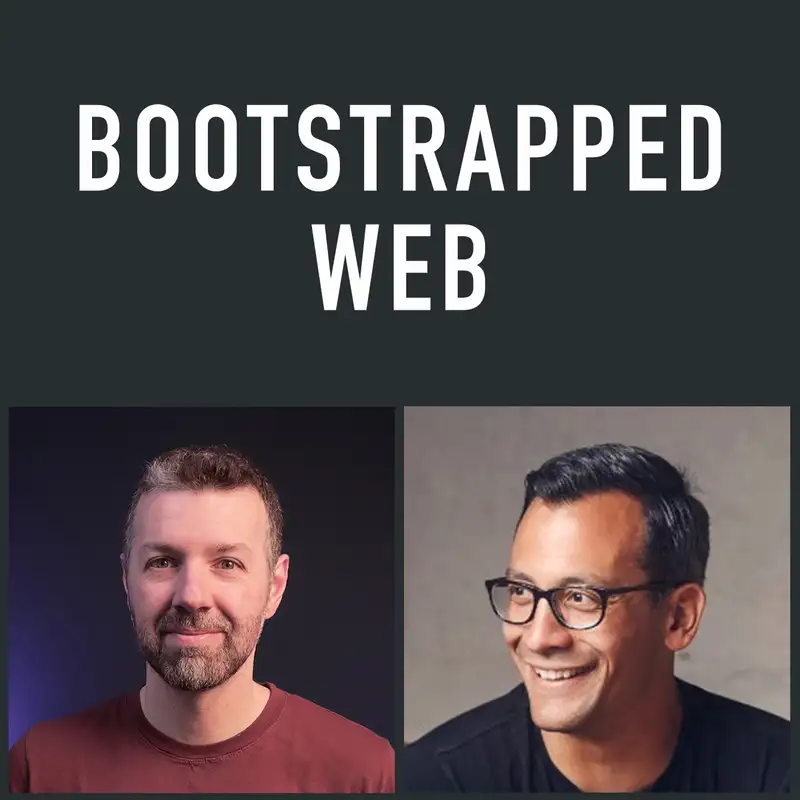
Alright. We're back with web again. This week, Jordan is off. He's hanging out with the family. So I'm joined today by Craig Hewitt and Justin Jackson.
Brian Casel:What's up, fellas?
Speaker 2:Doing well, man. Good to be here.
Speaker 3:Hey, Brian.
Brian Casel:Alright. And I think we're, coming from three different countries today. Is that is that right?
Speaker 2:Yeah. I think this is actually the first time you've had more French people from French countries on the show.
Speaker 3:Watch out. Watch out.
Brian Casel:That's probably true.
Speaker 2:This is this is the French invasion show.
Brian Casel:Yes. I I guess it is. We'll, we'll see how this goes. Or I guess it's kinda like the American invasion into Europe with Craigslist. I don't know.
Speaker 3:And then just coming out like next week, it might be really interesting, right? Yeah.
Speaker 2:We're gonna have to really hold ourselves back.
Brian Casel:I just hope it's not as close to that World Series game. I don't wanna stay up all night like like, just trembling with like, I don't know if I'm gonna be scared or who knows what's gonna happen anyway.
Speaker 2:Are you a baseball guy, Brian?
Brian Casel:I'm a I'm a really bad sports fan because I just basically tune in in the playoffs and the World Series and the Super Bowl and, you know, what whatever it is. I don't follow it all year long.
Speaker 2:That doesn't make you bad. That makes you efficient.
Brian Casel:I guess so. Yeah. So, you know, fellas, I think most people listening to this show probably know who you are. Justin and Craig, you each host your own podcasts and you've been around these parts for quite a while. So I think it might be cool just to start off, what are you guys focused on right now?
Brian Casel:As we get up to the 2016, what are kind of the products that you're working on? And maybe a bit of a focus for this episode as we were going into it. Obviously, I'm sure we're going go many different ways, but this whole question of like lifestyle business versus building up a big company and a long term vision for a company. And I know that all three of us have our hands kind of in a bunch of different projects and products maybe at the same time. We can talk a bit about managing that versus focused on one big thing.
Brian Casel:I know I've gone in different directions on that question over the years. So anyway, why don't we just start off with where things at right now? November 2016. Justin, what are you working on?
Speaker 2:So I just relaunched marketing for developers as a course. And one thing I realized so I I stopped consulting in November, took a break to clean some stuff up in December, and then went independent in January. And I've been waiting since I was 22 to be kind of running my own business again full time. And so I kind of went a little bit crazy and and started a bunch of things all at once. And I think one thing I learned, in those first six months, I spent about six months just doing all sorts
Brian Casel:And of you're just talking about 2016 right now.
Pippin Williamson:Like you're
Speaker 3:That's right.
Speaker 2:Just the first
Brian Casel:full year of being completely self employed, which actually I think a lot of people might be surprised to to learn that about you. I mean, we've been following you for a couple of years now online, but it's only this past year that you went fully on your own.
Speaker 2:Yeah. My wife and I had a deal. We had kids early. We started when we were 22, and the deal was I couldn't do a business full time until our kids were in school. And so that just happened last year.
Speaker 2:Liam went into grade one, and so it made sense to do it at that point. And also there's other things too. Right? Like, I felt like I'd built up enough audience and enough other things that I could take that leap. Basically, starting January 1, I was on my own for just, like, focused on my own stuff.
Speaker 2:And I think what I learned was that you really need to focus on one thing at a time. You need to have a product pipeline. So I was working on all these things. And when I was, you know, consulting full time, it was no problem because money was coming in. But then when you're only relying on products and you don't have something coming down the line, it got to June and I was like, oh, I made no money this month.
Speaker 2:Like, I should have planned better.
Brian Casel:Correct me if I'm wrong. You were doing a lot of different things that like some had recurring revenue, some were kind of one time purchase.
Speaker 2:Yeah. Mostly one time purchase things and way too much exploration stuff, like way too much just like, oh, I want to try this out and I want to try to serve this audience. And I'm glad I went through that. I think it was a good midlife crisis. And I think there's a lot of benefits to that.
Speaker 2:I'm still very pro, working on multiple things, but not all at once and being much more picky about those things.
Speaker 3:I'm sorry, don't you think the only way to learn that is to do it and get your hand in too many things and learn that, you know, an info product or a book or a course or a SaaS or a WordPress plugin isn't right for me is to just do it and screw it up maybe and then go, wow, never.
Speaker 2:That's like
Speaker 3:that funny object is never gonna come up again.
Speaker 2:Yeah, maybe, maybe. I mean, in retrospect, had some people like, do you know Michael Buckby? Do you know him? Yeah. He was one guy that was saying, man, I think you're like, I was going and trying to broaden my audience to artists and musicians and all sorts of other people.
Speaker 2:And he's like, you should have just stuck with developers. And at the time, I was like, nah. You don't know what you're talking about. But now, in retrospect, when I look at my day the data, like, where does most of my revenue come from? It's, you know, mostly from marketing for developers, which is the book I released last year, and then I just relaunched it as a course this year.
Brian Casel:I mean, just, you know, been watching what you've been doing for a while, I do think that that really connects. That just that whole concept of marketing for developers and whether that's coming through free content, a book, a membership, a course, like that is a problem that a identifiable market has and you're connected to that that audience and they know you, you know them really well. It's just, I think everything really connects and I definitely learned this very much the hard way over the last, I don't know, five or six years is like, I was also one of those people who just tried a lot of different things and ebook here, this kind of SaaS, that kind of SaaS, this product has service and consulting work, you know, and all different types of things and WordPress products, downloadable products, all this stuff. I liked that. I like moving from thing to thing.
Brian Casel:I still do it, but serving different audiences. That was the most challenging thing. And I feel like finally now in 2016, everything that I'm doing is at least somewhat interconnected. And just a couple of years ago, I was doing stuff for restaurants and some things for freelancers and web designers and then others just for entrepreneurs and especially the separation between restaurants and hospitality and the and the and like the entrepreneurial world completely separate. I still have my hands in multiple things like really focused on audience ops, and then I still have my personal site doing productized services and blogging there and stuff.
Brian Casel:But at least there is some overlap. I mean this podcast, Boost Drive Web is kind of like a side project as well. There is definitely some overlap like there are clients of Audience Hops who are also in my personal list or listeners of this podcast and there are an audience ops itself is a productized service business or at least it started that way. I teach about building productized services. So there's some overlap and case studies that I think are connected.
Brian Casel:But it's still like, even like now I'm doing this thing with like Friday notes that send an email out to my list every Friday.
Speaker 2:Okay. Yeah.
Brian Casel:And I treat audience ops as like my full time job. And I still have to break myself away from audience ops for a couple hours on Friday to write this email. And and there's this like this tension between like, should be working on my business, but I'm doing this side project. Or even right now, I'm recording a podcast. This is not an audience ops thing.
Brian Casel:This is Bootstrap Web. So for this hour, I'm I don't have my sole focus on my business. And not sure if that's good or bad, but I think it's working at least for now.
Speaker 2:You're kind of bitter right now as you're talking to us.
Brian Casel:Yeah, like you guys are kind of getting away here, but
Speaker 3:we're a burden. I think that switching cost, it's not just the time factor, but the emotional factor of switching cost is pretty real, right? Because you're taking a few minutes to step away from doing your audience ops work to at least set up for this podcast, which you've done 100 of or whatever. And then to get back in the audience ops mode afterwards, I find is a little bit tough. I have my hand in a few different things.
Speaker 3:And yeah, it's tough even within the business to focus on, you know, customer service and then marketing and development and kind of biz ops and then housekeeping and all that kind of stuff is hard enough. Yeah, to look at doing really different things is really hard. I think at least if you're in the same mindset and serving the same customer, it's pretty simple. One of the good anecdotes I heard about it was giving multiple solutions to your audience. I think Brennan Dunn does a good job of that, Because he has all the double your freelancing stuff, but it started as like a little ebook, right?
Speaker 3:And then built it into bigger and bigger courses and events and things to give multiple kind of yes options to your customers depending on kind of what they need. I think it's a great way to look at it.
Brian Casel:Yeah, exactly. That right now, back into like building mode with an audience ops and planning for 2017 and up till now we've just had the productized service and then it's going to become like a SaaS plus a service plus a training product that we're putting together all for the same audience, but like different segments or different products in that ladder. But Craig, so most people probably know you, founder of Podcast Motor, successful growing podcast editing service. But you guys recently acquired some other businesses and content stuff. Can you tell us about those?
Brian Casel:That's like a completely separate thing, right? Like how has that been going?
Speaker 3:In hindsight, I didn't know what I know now when we did that. Otherwise, I do kind of see the switching cost, even though we don't actively work on our content sites very much. They're kind of in the travel niche and they're monetized with AdSense and affiliate stuff. And the reason we did it was to help bridge the gap when I wanted to quit my day job, which wasn't that long ago. I quit my day job about six months ago now.
Speaker 3:Oh yeah, just celebrated my six month anniversary, I guess of me cutting the cord. Yeah. And the reason was, is we just kind of needed more income. And we looked at the ability to make an investment in a couple of Internet properties that cash flow really well relative to something like real estate or the stock market or anything like that. Looking at investing in online businesses is if you have the appetite for it and know something about online business like we do, it can be really lucrative.
Speaker 3:And so that was the purpose for it. And it's gone really well. I don't spend two hours a week on our sites and they make good money. And I think so far it's been a really good return. The thing I might do differently knowing what I know now is like we're talking about kind of a line, everything I do kind of under the same relative umbrella.
Speaker 3:I don't think I would want it to be all exactly the same, but at least sort of talking to the same audience and doing about the same thing. Yeah, and Podcast Motor is growing and doing great and I wouldn't necessarily need to do that now, I guess, from a financial perspective, but looking forward a little bit, know, we're looking at kind of expanding and doing more with our business and I want to at least be able to talk to an audience that I'm familiar with. So I think I learned that lesson that what I want to do in the future all needs to be kind of going generally down the same road.
Brian Casel:Yeah, I guess this also kind of brings up the question of what is the long term vision or even just like for like this year or next year, is it to grow a large company or is it to support your current lifestyle or a little bit of both? And how do you guys kind of think about that and like where this is headed and all that?
Speaker 2:Yeah. Mean, for me, like my initial goal was just to replace a portion of consulting revenue. So I said, you know, for this year, if I can make $10,000 a month, that would be a good start. And I still feel like it's still so new. So like in January, it'll be my second I'll be going into my second year and my goal is still financial.
Speaker 2:So now maybe, you know, my goal will be to get to $200,000 in revenue for the year. I'm a company of one. Right now, I really like that. I've thought about that a lot. I'm 36, so I'm not getting any younger.
Speaker 2:I spoke at a conference
Brian Casel:gray hairs on my beard for the first time this week. Oh, man. It's major milestone right there.
Speaker 2:I spoke at the AppSumo conference, in Austin, and I was the oldest speaker. I looked around the speaker table, and I I asked the question publicly. I was like, wait a second. Am I the oldest guy here? They all, like, looked at me like, yeah, Justin.
Speaker 2:You're, real freaking old. So, like, that weighs on me a little bit, but I really like just being a company of one right now. Any revenue I make, I basically get to keep. There's no there's no one else that I'm paying.
Speaker 3:That'd be so nice.
Speaker 2:I know. That's what I was
Brian Casel:just mentioning.
Speaker 2:And so the disadvantage to that is if if I get sick or whatever. So looking beyond two years or a year, I've been thinking a lot about there's not very many people in our space that are of the retiring age, and that worries me a bit. If you've ever worked on an old construction crew, there's always some old haggard dude that's like, guys, get out of this before, you know, you turn 40 because your knees and your back are gonna be gone. But we don't have
Brian Casel:lot dependent on your own time, then it's
Speaker 2:There's some danger there. But right If now you
Brian Casel:build things into like recurring revenue and build systems and that sort of thing. I do think that it's really challenging, if not impossible to do it completely solo forever. There are plenty of people who stay really, really small, like two or three support people and assistance and that sustains. I mean, like this year, I'm definitely on the other end of that stress thing because I've got a lot of people now on the team that are dependent on this thing continuing to roll on. I think the good thing is that right now the service is structured in a way that it's all recurring.
Brian Casel:So even the cost with people, especially the freelance contractors goes up and down as revenue goes up and down. But now for US based people have ramped up to the point where they're full time salary employees, they don't necessarily ramp up and down. And then we've got a bunch more people beyond that who've been with us every week. So that's definitely a sense pressure and like getting back to like, I should always be working on audience ops. Like that's the that definitely weighs on me all the time.
Brian Casel:But I think it's also like working with the team. I feel an obligation to them for them to know that like, Hey, I'm in here working every day too. I'm just working on the marketing stuff and sales and kind of the systems and growing stuff. Not necessarily I do have the ability to go take a vacation and the team is there to handle the service and handle, and we've got managers in place and everything like that. Yeah, there's definitely a pressure there for sure.
Speaker 3:Yeah. I think you kind of need to look at where you are in your life sort of cycle. And I think we all are probably getting to where we are gonna want to take the big shot, if you will. But you have to know when it's the right time to take that too. And I think that, you know, Brian, for you with audience ops and me with Podcast Motor, growing a service business to whatever, a 100,000 a month in MRR is not like the shot to take necessarily.
Speaker 3:I think it's a nice business to have and to grow and sustain and we have people that are relying on us and it's great for me. I think it's great to provide jobs for so many people. We have 12 people that we employ at least at some level, and that's great and I love it. I think you look at something that could really be big is when I would probably change my mind, because I'm in the same boat as you guys. I mean, you know, we moved to France so that we could make a big lifestyle change.
Speaker 3:It's not, you know, we didn't move to France so I could work all the time. But if I got the chance to build, I use it all the time, build, you know, drip or convert kit or whatever, I would definitely take it because I also have learned enough to, I think be able to do it successfully now. So I think it's just a matter of time.
Brian Casel:Yeah, I mean, like Jordan and I bat this question around a lot on this podcast, but in terms of like lifestyle with business, I value two things. Number one, having plenty of free time and especially now more than I used to when I was younger. I mean, with two little kids running around and we also like to travel a lot and and take a lot of free time. And I like to take afternoons off and Fridays, try to keep pretty light and weekends like that stuff, that time is gold to me. And when I was in my twenties, I could happily work on a product, pull all nighters and work over a weekend and that's totally not a problem.
Brian Casel:Now I just can't do that and I don't want to do that. That's number one, but then number two is I feel strongly that I have to really dig what I'm working on. But when I'm here in the office and working, got to really like not everything is gonna be there gonna be fires, there's gonna be things that suck, it's just how it goes. But if it's a total grind and if I don't really enjoy talking to our customers and our clients, like on calls and meeting them at conferences and things, I don't enjoy doing that, this is not working. No matter how scalable or sustainable it is or how successful it is.
Brian Casel:I mean, I look back to restaurant engine, I was not willing to fly my ass out to Chicago to go to the restaurant industry conference and talk to restaurant vendors. That's not something I'm gonna wanna do.
Speaker 2:Again, I keep thinking about this question. So one of the things I'm trying to challenge myself with this year is to make myself uncomfortable whenever I can. So for me, always happens through discomfort. And so one of the areas I'm trying to push myself in is I like being a solopreneur. I like just working for myself.
Speaker 2:I really like to work. Like my favorite part of the day is biking to my office and spending time here. It's like my little studio, and I get to, like, work on things all day and then go home. Like, I like that. But, you know, to Craig's point, like so if you'd asked me six months ago or even I even today, like, you wanna take a big take a big shot at something?
Speaker 2:I'd say, no. I don't wanna take a big shot at something. That just doesn't appeal to me right now. But I'm trying to consider it partly because I worry about the future, and I wonder how long is this sustainable, just me. And partly because I wonder if eventually my guess is eventually, this will no longer be this will be too comfortable for me, and I won't be learning anything new, and I'll want to go do something bigger.
Speaker 2:Maybe. Who knows? It's it's really hard to tell. And again, like, Jason Fried is, like, maybe in his forties or something like that. So if that's our our, you know, prototype of a bootstrap SaaS founder and he's the unicorn, like, we have no idea what it's like to have live a full life and then retire from that business.
Speaker 2:Like there's not that many examples of that. And I just kind of feel like, there's not enough data.
Brian Casel:Yeah. We were all just talking about like, we're getting old. We're not we're not that old.
Speaker 2:Be clear here, know. And the other
Brian Casel:thing is, thing that I have learned over these past few years is how how much you can get done in a single year and and how much time there's plenty of time ahead of us to to get into other stuff and I gotta constantly try to pull myself back and like, get your head out of the future, get your and and start focusing on what's happening right now. Sometimes I over plan for next year or the year after. When am I going to build the SaaS into XMRR? What's that going to turn into? Are you even thinking five years down the line, ten years down the line, what is this business gonna look like?
Brian Casel:Like there's plenty of time to evolve into that and there's gonna be way more and different data then than there is now. So there's no point in looking that far ahead.
Speaker 3:So that brings up a good point. It's a little off topic, but planning and what you guys do for planning to sort of get your business where you wanna go. Do you guys do like annual or quarterly internal business reviews with yourself or?
Brian Casel:I do a lot of monthly planning and I also do annual, but what I always find is the annual plan changes so much. Right now, if I look at my 2016 annual plan, like probably like four or five items on there that I wanted to get done this year and two of them I've already decided like they're just not gonna happen. Like or because I didn't want, like I decided not to go that direction. But on a monthly basis, I really look hard at and I guess quarterly too, but what are the four or so things that need to ship this month? But sometimes it's not even like shipping.
Brian Casel:Sometimes it's like if I look back to October, which was October just ended. That was a big strategic planning month. Not a whole lot was shipped. We started development on the SaaS, but like I started thinking through marketing and what is the new marketing funnel gonna look like? What is the product line going to look like in 2017?
Brian Casel:And so I spent a lot of time batting different ideas around on that. And I made some conclusions and some final decisions on that in October. Now that we're in November, now it's like, okay, got the plan in place. Now it's about execution and getting the team together, assigning tasks, writing out outlines, setting internal deadlines and delivery dates. And now we're moving ahead.
Brian Casel:I think about it in like that. Mean, in terms of like goals and stuff like MRR goals, think it's good to do a little bit of projection, but again, like it's gonna change so much that a lot of the projections I find have been, we hit them earlier than I expected. But then other times it's like the whole product line changed. So there's no way to predict.
Speaker 3:Yeah, we do a similar thing. Do definitely. There's a monthly reviews of kind of what the business did the last month and then kind of what we want to do the coming month. And then look at the year kind of in two halves. I know in the day job it was month to month and just so much micro focus on everything.
Speaker 3:I think our business hasn't changed that much, which is nice. So it's just kind of how can we do more and better of the same with Podcast Motor and so kind of doing a monthly review of how we did, and then kind of how can we do a little bit better the next month, and then twice a year kind of take, you know, I know a lot of folks talk to like a founder retreat or whatever, I kind of take like a half a day and just tell my wife, hey, I just need to go think and I'll go just on a hike or something, and really just kind of say, are we going down the right path still? And fortunately, you know, to almost, you know, a year and a half into the business or whatever, it's been good enough. But I can see, I mean, we were launching a SaaS or really releasing a bunch of new products needing to do kind of the big picture look a lot more often.
Brian Casel:I think the hardest thing about it is breaking yourself out of the day to day ups and downs of the business. If we had a slow month in terms of sales, if we had more cancellations than usual, like those kinds of things can easily get inside my head and say, what do we like, we have to fix sales right now or we have to fix churn right now. But if I look at the year as a whole, like, sales and churn went up and down at different times. And it's important to just like step back and decide like, is this a long term problem that we really need to sink into and fix? Or is it just a bad month?
Brian Casel:I think, and like don't deviate from the bigger plan. I think that's, I try to go back and forth between like planning and then execute for like three months and then maybe regroup and plan some more and then execute and try to separate myself from the day to day. But it's so hard. The other challenge is not like taking that time to go on a walk and plan or take a retreat or something because a lot of times you make a lot of progress in your business just from working every day. And then all of a sudden it's like, Oh wow, 10 ks MRR.
Brian Casel:Was like a goal that I had since a few years back. And if you don't take the time to set new goals and set new targets, then that's when I start to just chase shiny objects and do all these different things and you kind of lose focus.
Speaker 2:Yeah. For me, it's really project based. So I just like finished one thing. I finished the relaunch of marketing for developers. And immediately I was like, okay, I'm gonna start working on the next thing.
Speaker 2:I'm not very good at long term planning. I gotta get I gotta get better at it because I Paul Jarvis is always kinda getting after me for this. Because he thinks usually in three month chunks, like, okay. What's coming down the the line three months from now? And then working backwards and thinking, okay, what do I need to do up until that point on a monthly basis?
Speaker 2:It's always like, how much revenue did I make last month? Where did it come from? Okay. Now let's start this month. Right?
Speaker 2:You know, every month is basically like, where am I gonna make my revenue this month? And hopefully, there's something in place that will allow me to do that. Right? Whether it's re promoting an old product or starting something new. So I don't feel like I'm great at it.
Speaker 2:I think the one thing that I've gotten better at is this idea of setting one big goal that's always top line revenue, like, whatever it is. 10,000 a month, 20,000 a month, etcetera. And then just like trying to hit that every month and then saying, okay, I'm gonna start working on this. When am I gonna launch it? And then working backwards from there.
Speaker 2:And that's been super helpful to me.
Brian Casel:You've built a really great audience and kind of a personal brand for yourself these past few years through podcasting, blogging and speaking and all that. So I think that definitely puts you in a unique group and definitely at a unique and well deserved advantage, I think when you launch products. I think it also speaks to your ability to research and know your customers well, like the marketing for developers, like that came out of you knowing your audience, right? How much of that do you see playing into all the projects that you choose to take on? If you look at the folks who've done like audience focused businesses, if you will, I think about like Brennan and Nathan Barry and plenty of other folks, but how do think about that?
Speaker 2:Well, one thing is that in terms of like what I focus on, I often do optimize for attention. Meaning I can never retreat too much into just working heads down because you have to maintain a certain amount of visibility. If you're going to run anything like I'm doing, that's part of the game is that people have to know who you are, they have to trust you, and they have to like you. And if if those three things aren't true, then, they won't buy. So people that don't like me, don't buy my stuff.
Speaker 2:People that don't know, don't know me, don't buy my stuff. And people that don't trust me, don't buy my stuff. Yep. So that is a huge thing. But the advantage to that is that when they know you and like you and trust you, then you have this great ongoing conversation with them, which is usually a pretty good compass for where you want to go next.
Speaker 2:And I I I think one of the biggest breakthroughs I had this year was finally fixing Product People Club, which is this membership site I've had for a long time. And I never felt like I had the right fit for that thing, which was basically, it started as a campfire chat that was $10 a month, then eventually grew into a bigger membership site. But I finally feel like I fixed it. I basically feel like I have product market fit now. After tons of months of trying and trying and trying and every month thinking I should just can this project and not use it, just staying in constant conversation with people.
Speaker 2:And, you know, it usually starts like people might be a fan and that's why they kind of get into your world. But eventually, you build such a relationship that it's like a relationship and they're fine with telling you where your stuff sucks. And, you know, I had some people that had been customers for a long time that were like, this black people club kind of sucks, man. And those converse those hard conversations were what eventually fixed it. So, yeah, I think, again, that's the part I love.
Speaker 2:You know, Nathan has been pretty upfront to say he's kind of given up a lot of that, whatever you want to call it, you know, audience kind of focused, kind of influencer focused, whatever you might call it. But I at this stage, I still really like it because I love building relationships with all these people. I still feel like I've got lots to learn there too.
Brian Casel:I think it's interesting. Even what Nathan's been doing, you know, with, building up ConvertKit, there are plenty people who still follow what he's doing, even though he may not be blocking on his personal side as much and releasing educational products like he used to. There's no doubt about it. I mean, you're at such an advantage when you have an audience who's tuned in to what you're working on. And it does take extra effort to put yourself out there and take time to write a personal recap post to podcast once a week or to you know, like these are things that most business owners just don't fully understand the time investment and they don't really necessarily see the ROI.
Brian Casel:And I'm not saying that it's for everyone.
Speaker 2:It is for everyone in the sense that the switch is from, personal marketing to brand marketing. So, like, you need always need visibility. Like, if people don't know who you are like, other day, I recommended Craig Podcast Motor on Twitter because it's the top of mind
Speaker 3:Mhmm.
Speaker 2:Podcast done for you service. But if he if Craig stops being visible and all of a sudden someone else comes up and I just think of them first, that's who I'm gonna share. Right? Likewise, if you're gonna you know, like when people think about freelancing, they think of Brennan Dunn. That's there's a very kind of tightly aligned thing there.
Speaker 2:But if he stops, like if he stops tweeting, blogging, getting on podcasts, putting on events, all that kind of stuff, people won't think of him first. And so that's the part I like right now. We'll see if I keep liking it. But no matter what you're doing, whether it's a brand or a product or your personal thing, visibility is it's the game. Like that's you have to always be top of mind or no one's gonna think of you when they when they're like, their boss says, we need someone to edit our podcasts.
Speaker 2:And the person goes, okay, who do I know that edits podcasts? Know?
Speaker 3:Google that. Yeah.
Speaker 2:Google that. Yeah.
Speaker 3:I I think, you know, it's it's neat to prove out that you Justin are able to, we're talking about serve the same audience, but in a bunch of different ways and with a bunch of different products, maybe slightly different audiences. Whereas like Brennan and Nathan and a lot of these guys are solely focused on one product. For me, and I think probably for you too, that would be a little challenging. I would have a hard time kind of going to work every day doing one thing for years, the thought of that is really tough for me. I just am quick to find something else that interests me and a little quick to get bored with starting or growing something.
Speaker 3:I think, I don't know, I guess I'm relatively new to this, a couple of years in,
Brian Casel:but I think it is easy to get bored, at the same time as the thing grows and the more and more engaged you are with it, there's so many different problems within one business that need to get solved different And there's so many little projects that need to be built out. Like for example, hire writers regularly in audience ops and I probably have personally interviewed, hired something like 20 plus writers over the past year or two. All of them are currently on the team, but just over the course of reviewing applications, interviewing writers and then bringing on writers and training them and bring them on. Two months ago, it's like, okay, it's time to hire another writer. This time now we have a team manager in place.
Brian Casel:Instead I worked system to train her to review the applications and do the interviews. Then she just kind of brings up like the final applicants and I'll just do a final interview. So that was a problem that I worked on that emerged like eighteen months into it. And it's like something to like sink yourself into that and then whether it's like removing yourself from processes or starting up new marketing campaigns or thinking about a second or third product from the same brand. That's what I'm really enjoying more now in audience ops than I did in something like restaurant engine or any of the little side products that I had worked on in years past.
Brian Casel:I mean, other thing that I'm constantly looking for now in everything that I do is how can this become automated and continue producing going forward after I stopped working on this one project. A lot of that on my personal blog and selling the productized course, that actually continues to sell pretty well every month. Not nearly as much as it did like when it first launched or when I do like big promotions and stuff like that, but like it still sells a handful of sales every month, which is a chunk of my monthly income. And I worked hard on a lot of backend automation with my list and sending out free resources and free recorded workshops and repurposing a lot of my old content that goes out to the lists and even timing coupons and things like that. I think that stuff is important as well.
Brian Casel:Just recently I set up Edgar for automated tweets. I hope that doesn't become too annoying in the next few weeks. I'm trying to repurpose a lot of the stuff that I spent the last few years producing. And now that I'm focused so much on audience ops, I'm not writing as many new things on my personal blog. So I think it's important to to think in terms of like, how can this continue on?
Brian Casel:Like, Justin, like how much of that kind of stuff do you do? Like, because you you've produced so much content and
Speaker 2:I need to get better at it. Again, that's a place that I think I'm trying to force myself to get comfortable. You know, there's always one side of you. Like, one side of me is like, I wanna write every tweet. You know?
Speaker 2:I want like, I don't want anything automated. I wanna be fully engaged in the whole thing. I wanna write new stuff all the time because it forces me to write new stuff. But on the other hand, even like the you know, I I did this post purchase drip for people that bought my book Jolt. And that alone was amazing in terms of what I was able to accomplish with that.
Speaker 2:So like, you know, thanks for buying. Here's a free gift. And then a few days later, you know, how's the book? You know, you can listen to it on this secret podcast feed. And then a few days later, leave a review.
Speaker 2:Like, that automated process alone kind of generated a bunch more sales and a bunch more interest. So I need to get better at it. I'm not very good at it right now. I I need to do more of it. I'm like fully engaged in it.
Speaker 2:So
Brian Casel:It's interesting that you that's actually a so that's a post purchase sequence, which is that's usually like the last thing that people think about. But if there's a lot of marketing automation that goes to get a subscriber to buy something for the first time.
Speaker 2:Yeah.
Brian Casel:You're smart to focus on people who've already bought because they're either more likely to recommend it or buy something else.
Speaker 2:Yeah. And the last drip in that sequence is, you know, here's some other things you could buy. So, yeah, I need to do that more. And I, you know, I've got a few things kinda out there that I wish I was like, ah, you know what? If I just fix that up, it would perform better.
Speaker 2:But I really like Mickey.
Brian Casel:Oh, there's so many of those.
Speaker 3:Maybe my little
Brian Casel:site needs to be fixed up.
Speaker 3:I think that, automating some of this stuff and and, you know, like you're saying, putting the drip sequences is easier when you have a big chunk of content around a particular item. And Justin, since you're into so many different things, maybe that's a little more challenging. Whereas Brian, I know Productize and all your personal site is relatively evergreen and all on the same type of content. So I wonder if that's why it's easier for you.
Speaker 2:I definitely have a lot of stuff I could reuse.
Brian Casel:I remember when I went to actually got the idea for this originally from Nathan Barry when he was talking about doing like, I forgot how he put it. I think of it now as like the best of newsletters. Mhmm. And so like, if you're a new subscriber in my list, like the first three months, you're just getting newsletters of stuff that I wrote like a year or two ago. Which is like handpicked like the 10 or 12 best articles.
Brian Casel:But when I initially set that up and that's been running for about a year now, I remember I had to go through my site, I had to remove the date stamps and all the articles and then like kind of read through them and and tweak and make sure that I'm not talking about like, oh, it's Christmas time again. We're like anything that's like related to any date I had to kind of remove and make it more evergreen. But you know, one run through of that and then kind of and then also tweak the newsletter.
Speaker 2:So did that work though? Like in terms of results? Like were you able to see results from that that were significant? Or is it more just like you like it because it makes you feel at ease because you know that you've got this automated process.
Brian Casel:Yeah, I think it works. It definitely keeps traffic coming back to my best performing stuff. And those articles aren't getting buried in the archives. And there are definitely some calls to action for to to get into the productized course throughout that sequence and that definitely drives some of the monthly sales and whatnot.
Speaker 2:Okay. So Craig, on your side, how have you automated your thing? Like if someone comes to your site to PodcastMotor and, you know, sends in a request, what is the kind of sequence that happens and how much of that is automated?
Speaker 3:Yeah, so the inbound stuff is not automated. I have a sales background, so I enjoy having the conversations with our customers and our potential customers. To this point, I'm still doing all of the sales calls and handling a lot of the new inquiries. We have somebody who handles some of the kind of standards like, what if you wanna do two shows a month instead of four or five like weekly shows? So we have some people that reply to some of those messages, but the real automation we've built in is in kind of conducting the service itself.
Speaker 3:So like onboarding a new customer is pretty complicated, especially if they're starting a new show. So we've done a lot with Trello and Gravity Forms and all this kind of stuff and drip to automate that. It's been the biggest help in growing the business kind of easily. And I know Brian can kind of attest to how growing a service business is challenging if you don't automate it, because then every new customer means a lot of work, you know, there's like testing for you selling another book or course or whatever is maybe no extra work, but growing a service business, if you don't automate it makes a horrible job.
Brian Casel:We have a ton of automation, but a lot of it on product side service side of what we do, automation is not the right word. It's done manually by people, but we have very standardized processes and tools and methods for doing things and we do things in a certain way and there's a ton of stuff that we just don't do because it doesn't fit into our recommended strategy that we implement for customers that they're buying into. That definitely helps as well, like not to do everything custom, but to do it in one standard way. Definitely helps.
Speaker 2:I you know, just something that's still kinda stuck in my crowd that we talked about in terms of, you know, a lot of these things are about we've talked about building towards something bigger. And again, I'm just wondering why I'm holding myself back from that idea of, like, building something bigger. So for you guys, what is it? Is it the idea of making more money? Is it the idea of just building something that has the respect of your peers?
Speaker 2:What's the motivation? Where does your ambition come from? Maybe that's the question.
Brian Casel:I think having gone through the sale of Restaurant Engine, I really learned what makes a business valuable as like an asset on its own and what would make it valuable to somebody to buy the business. And I'm not thinking in any way of selling audience ops anytime soon, maybe not ever. And I definitely see myself sinking many years into this thing and growing it. But I think all the same objectives of building it into a self sustaining business that has value, that's profitable, that supports a team, supports a growing customer base, solves real problems for customers and does it in a very systematic with predictable growth. Those are all really good things to strive for even if you're not planning on selling the business, but they also make it a saleable valuable asset as well.
Brian Casel:It adds value into the business, but it also adds value to me personally because it makes it more It allows me to have more freedom, more time off and lower and lower stress. That like the first year of launching something, it's like, this is really stressful because it's not replacing what I made before and I need to get to a certain point to support my family. Then even once it gets to a certain, once it surpasses those goals, it's like, well, there's still too many ups and downs. Some months are really good, some months are down and those really stress me the hell out. So now I I need to make it less and less stress the more it grows.
Brian Casel:That I guess that's that's how I think about it. Yeah. I think that's yeah. I do want
Speaker 2:idea of a sale able asset is a good point because that's something I'm not really thinking about at all. I can't sell none of this crap out. Like, no one's gonna wanna buy any of these things in terms of an acquisition. Right? I have thought about that before.
Speaker 2:That's a good point.
Speaker 3:I think something that's always kind of in the back of my mind is like Podcast Motor has been a huge and wonderful learning experience and it's grown a little bit in spite of my ignorance, you know, I've learned a lot from Brian and other kinds that run productized services. At this point, we do a lot of marketing, we don't do any sort of outbound sales or anything like that, so it's growing very organically and not a huge clip, which is fine with me because I'm still learning a lot about it and other business. But yeah, the big shot is really kind of why I continue to grow and work on podcast. I mean, it's probably not going to be my big shot, but sort of looking around the corner, if you will, like my big chance to do whatever and I'll probably screw it up, then the next one maybe is gonna be where can I do make a big business out of something and sell it because you look at, like Rob Walling selling drip recently, I mean, it's just over, right? You sell for 20,000,000 or whatever and all of the work you've done is kind of worth it.
Speaker 3:And so growing and learning how to grow and manage right now is kind of the work I'm doing to get ready for that later on.
Brian Casel:I should say, Justin, I kind of relate to what you were asking or saying here about ambition because I also feel like I don't have, I don't think in as big terms as a lot of other people that I know. I mean, like Jordan, we're just gonna talk about Jordan because he's not here.
Speaker 3:Jordan should be here for this one.
Brian Casel:Just thinking about multimillion businesses. I mean, guess I do have that go like a revenue goal like that, but I don't I'm not the kind of person to think about like, alright, this has to grow into a venture backed IPO. You know, that's these are things that I don't ever foresee for myself, and I frankly don't have any interest in in going. I I really just wanna have a comfortable lifestyle, but also build valuable assets that will allow my family to keep living this lifestyle in the next ten, twenty years, especially as I get older. The other thing that I think about is some entrepreneurs that I know who are in their forties or fifties, who've built their businesses to a point where they do have multiple business assets and they're able to remove themselves even more to a point where they get an idea for some new product and us, we would go and build that product and start designing it and wireframing it and launching it.
Brian Casel:But guys on that level, they give it to their
Speaker 3:Now you're to do it.
Brian Casel:Product manager. Here's the idea and go run with it and let's do that on the side and let's do these five other things and just kind of invest in all these different things. So whatever I'm building now should be building up into something like that.
Speaker 2:Yeah. Like right now, my ambition is just to feed my family. And so the thing I've been trying to force myself to do is to think bigger. And then when you think bigger, you just start to ask other kind of existential questions like, what is the point of building something bigger? What what's driving the ambition?
Speaker 2:So for Nathan, initially, it was he wanted a bigger challenge. He wanted to have a team. You know, he wanted to crack that that the secret code of running a profitable software as a service business. And so that's what motivated his his change. Right?
Speaker 2:It's interesting to kind of think about what's actually motivating people to, as Craig says, take that big shot. And also maybe what is holding people back. There's there's like this tension between those two things of, yeah, I could take a big shot and, you know, but why do I want to hold myself back from that too at the same time?
Brian Casel:Yeah, I think a lot of entrepreneurs, you know, contrary to popular belief or there's just this misconception that like I'm very, very risk averse. I'm not gonna go take a huge risk on something. As fast as I like to move from day to day, I like the freedom of being able to build this business as slowly as I want And I ever really want to have the pressure of like, we have to reach a million MRR to reach an IPO in the next three, five years. Don't ever want to have that kind of pressure, but I've also experienced the kind of pressure of like, all right, I hate the work and it's really pissing me off and stressing me out and whatever product work I'm doing right now is not making enough money to pay the bills. That's another kind of stress I've experienced plenty of times in recent years.
Brian Casel:So I'm trying to keep myself between those two extremes. Yeah. It's possible.
Speaker 3:I think ConvertKit is an interesting case study of this because in my head I say that like when the right opportunity presents itself, I'll know it and that'll be the time to go all in. Nathan's been pretty open about ConvertKit really floundering for a long time and then deciding to double down and reinvest to make it his sole focus. I it gets really interesting because in my head, I think, look at, you know, when the opportunity presents itself, I'll know it and it'll be obvious and I'll be really excited about it. It'll be the time when I don't see all the shiny objects and are able to focus on something for like five years. But I definitely applaud him for saying like, I'm going to make this work.
Speaker 3:This can and should work and I'm going to make it work. When it had sort of floundered for a while and in a lot of respects, maybe he shouldn't have done it. So it's just real interesting, I think.
Speaker 2:Yeah. Mean, there's a cautionary tale in there too, in that how many people start SaaS businesses every year and how many of them even get to $10,000 a month in MRR? Nathan's an interesting case study because he was he had success doing what he was doing before and then he had success doing this. Statistically, he is an absolute outlier, like an outlier within outliers. This is an example of me operating between two tensions of on one hand saying, wanna, I should push myself to go after something bigger.
Speaker 2:And the other side of me going, but statistically, you know, there's lots of good people that are, you know, way smarter than me and way whatever that have tried the same thing. And statistically, there are not that many that get to 10,000 MRR a month, much less whatever Nathan's
Brian Casel:at now.
Speaker 2:Right? But on the other hand, part of me knows what, but if I took more of those chances, I would be increasing my chance of
Speaker 3:If you weren't chicken shit about it, yeah.
Brian Casel:If I went after Well, first of all, you have to remember all the advantages that you have working for you just out of the gate. Not just the fact that you have a list, but the fact that you'll identify the pain points much more clearly and you're already connected to your audience and to your market. So literally just repeating what you've done up until now of listening to them and listening to their problems, that's gonna basically guide you, you
Speaker 2:know Mhmm.
Brian Casel:To whatever products. Like and whether it's a SaaS or or a book or downloadable software or whatever it is like
Speaker 2:I like that idea of the big shot can grow out of your little shot.
Brian Casel:And if you look at what ConvertKit was, I mean, same thing. I mean, it kind of grew out
Speaker 2:of made he kind of
Brian Casel:made a name for himself in a way through email marketing and and, you know, it kind of fit, What you're saying about growing a SaaS to 10 ks MRR and this gets off into a tangent, maybe another whole episode, but there is this common like maybe misconception or it just takes a lot of time to sustain that sort of business to even to get it up to 10 MRR that is not gonna be 10 profit. In order to sustain that for as long as it takes to get to that point and beyond, there has to be a sense of there has to be a reality check and some plan in place for self funding that or or plan to to get some sort of investment for it. I feel like there's not enough discussion of of that in our circles. Whether you're gonna self fund through consulting work, with a productized service, through selling info products, with if you've been building an audience, kind of have that as an option at your disposal. Even now with the SaaS that we're planning for audience ops, the audience ops service is basically funding all the development of building the SaaS, which is gonna be a six to eight months just building before we can even get it out and launched.
Brian Casel:And we're funding that, but I'm still trying to think ahead to how we're gonna fund this through the first year of getting enough paying customers to make that just a viable business on its own. So now I'm planning to do a paid training product from Audience Ops to help as another revenue channel to help offset and continue to self fund. So I think there are different decisions that need to go into planning how to launch a product like that than what we see in most of the press, which is
Speaker 2:Yeah, totally. Well, Nathan saying, I'm gonna take $50 of my own money Right. And just put it down. And I'm gonna give up paying myself anything for the first whatever. And all of a sudden realizing he needed a line of credit and then he couldn't get one.
Speaker 2:You know, like there's all these like there's all these places where it could have not gone well. And he's just been transparent enough that we could see the process. Yeah. But man, like, you think it and he was pretty lean, you know? Like, that that was so there's still like the difference between maybe the comfort I have right now, which is I can always launch another smaller training product, but the idea of like, you know what, I'm going to risk $50 of my own money and I'm to risk two to three years of development.
Speaker 2:And, you know, that that gap is the scary part. Not
Brian Casel:It is.
Speaker 2:So you can grow a bigger shot out of your existing kind of what you've built up. But, you know, there's so many examples of, you know, Casey Neistat launched Beam. And if anyone had a built in audience and advantage in that market, it was him. And obviously, it did not work. We're we're way too focused on, like, the survivorship bias in this culture is very strong.
Speaker 2:There's also this idea that SaaS is gonna SaaS is like the golden ticket always. And that's why I like what your episode with Ian Landsman was so good because he's like, hold on guys. It's not unicorns and rainbows. Like, there's so many months I look at someone running a consulting company and I wish I was in that guy's shoes, you know? So I think I like operating in the tension.
Speaker 2:So it makes me slower than someone who's like, you know, maybe like Jordan and super ambitious. But for me, I just love thinking about both sides and Yeah. I mean, maybe it'll be my downfall because I'm not willing to to take that big
Brian Casel:I think a lot of times like the planning ahead to launching something like a SaaS or taking a big shot as we've been calling it here. I think a lot of times it's about foregoing short term growth and it's not necessarily taking a shot like, Oh, I'm gonna If this doesn't work out, I'm gonna go into deep amounts of debt. Like that to me is way more risk than I would be willing to take on for anything. This investment into the SaaS that we're building now, I could just totally not do that and double or triple down on our service and grow a much higher revenue business over the next year. But trying to forego that and try to maintain that at its current level and basically make 2017 like a breakeven year instead of a high growth year in terms of revenue, but remaking the product line.
Brian Casel:I look at what Nathan did with with ConvertKit. He put aside a ton of revenue from info products and education stuff and continuing to grow his audience. And he invest he invested his own money into ConvertKit and he foregone a large growth that he could have had, but on the other side with a view of a two to three year window, he was able to turn around ConvertKit.
Speaker 3:I think it's a problem you get to screw that up a couple of times too, right? Mean, it might not be a make or break thing, but I think from your, talked about us all getting old, if you're in your late forties, by the time you actually figure it out, it might be too late, right?
Brian Casel:Yeah, but I do think that if you work on and like Justin has been teaching for years, if you work on enough small projects and ship enough things and do a lot of different things, you're gonna learn so much over the course of that time that by the time you start to get into the bigger life changing business moves, you have so much experience under your belt that you're going to bat better than 500 on most of those decisions.
Speaker 2:Yeah. I think it also is speaks to context. And so, like, one of the reasons I am limiting myself from making a big shot is I don't feel like I have the money or the time or the resources to do that. Like, I don't have $50. I could just plow into a software as a service right now.
Speaker 2:And so context is everything. Right? Like, the the the risk is too great right now for me to do that. And so, you know, my goal, I guess, some ways is I need to get to my point to a point where I could take that big shot. The other thing I'm always okay with too is like, maybe I will never have that opportunity.
Speaker 2:Like, I've got four kids. I gotta I gotta feed and send to college and pay for health care and all that other stuff.
Brian Casel:And I thought you live in Canada.
Speaker 2:I do live in Canada. So health care is a lot cheaper. Don't tell
Brian Casel:me about health care costs. That's all I'm saying.
Speaker 2:Yeah. Yeah. I know. I know. The the context is important.
Speaker 2:So the other thing we don't talk about very much is like Nathan did have $50. He could invest in it and he could he was able to forego income for a long time as well because he built his thing up to that point. I'm a year in. I'm not ready for that yet, you know? And so maybe my reluctance, like people's kind of public whatever, public ambition is always a reflection of what's happening privately, what their personal context is.
Speaker 2:We all weigh the risk that that would take. And right now, I'm like, no way. Like, there's no way I could start a software as a service and and have that amount of time and energy and money to to make it work. Not right now, but maybe, you know
Brian Casel:One year is a is a short amount of time and you're not you're not even past the the one year mark
Speaker 2:of I know. This could crash and burn this month.
Brian Casel:No. But but at the same time, you've been at this for what, how many years making yourself online and I think for all of us and everyone listening, the thing that I always fail to remember is like how much there's plenty of time to get into stuff down the line. Even if you look at the people who were all referencing that the Nathan Barry's, the Rob Wallings, the Brennan Dunns, everyone like in our community here, we're looking at where they're at today, but they've been at this for how many years?
Speaker 2:Exactly. How
Brian Casel:many iterations have they gone through and how many mistakes have they made? And like that's what everyone that comes with the territory, you know?
Speaker 3:Yeah. And I think there's nothing to laugh at with, you know, maybe where the three of us are in different scales, even, providing for our families, owning our time and having the freedom to do pretty much whatever you want, I think is nothing to laugh at, not tooting any of our proverbial horns, but it's a pretty solid achievement. And to look at the big shot or whatever, and potentially kind of losing some of this is pretty scary. I think that the upside is definitely there, but there's a lot of ways to skin the cat of building a bigger saleable, really nice business. SaaS is one of those.
Speaker 3:But I know Justin talked about like peak SaaS, and I agree it's sort of risky, but I think that we can all just kind of look at like just growing a bigger version of the existing business we have as being really sort of predictable, not super risky and really a very good business move.
Brian Casel:Every now and then I'm reminded of how good we have it right now. And I think everybody listening to this, I mean, the other night I was in New York City walking past Penn Station around rush hour and I just see thousands and thousands of people just cramming into the train station to get on that commuter train home. And I'm just like, oh my and I used to do that years ago. Just
Speaker 2:the fact
Brian Casel:that I'm sitting in my home office right now and I don't have to spend three hours a day on a commuter train.
Speaker 2:Yeah. Know? For sure there's someone listening to this episode that's stuck in traffic. I'm sorry about that. It's like, the fuck up you guys.
Speaker 2:You guys are and so I think and that's why I think I would agree for sure that it is always worth it to start making your own things. It is always worth it to start small and start now whether you're twenty, thirty, forty, fifty, sixty, 70, 80, 90. I do not think I'm not
Brian Casel:Maybe it's a little late, but
Speaker 2:I'm not as optimistic as a lot of people in our culture that SaaS is a golden ticket and that everyone should pursue it and that even any great percentage of us will achieve it because I know that statistically that is just not possible. The reason I love what I'm doing right now is I think it is possible for anybody, regardless of their stage of life, to start creating a little tiny something and put it out into the world and get all sorts of benefit from that. But the big shots are completely the ability to take a big shot is completely dependent on a very privileged context and then having the guts to do it. So maybe I I have that privileged context. I probably do and I just lack the guts.
Speaker 2:But there are for sure, like if you were a single mom, it's going to be a lot harder for you to start a software as a service. That context will make it more difficult for sure.
Brian Casel:I just don't think I don't think of it in terms of a big shot. I just think that these things evolve over a long period of time and and what looking from the outside in on other SaaS businesses or just businesses in general, those did not happen overnight. Even if you look at when they initially invested in starting that SaaS, the idea for the SaaS came months or years before that and there was months or years of learning with other products that led up to the confidence to do that.
Speaker 2:That could be true, but there's still obviously a gap. Right? Like, even like Ruben's been really upfront with saying, you know, a big reason BidSketch succeeded is he sacrificed an enormous amount building it, lots of time, lots of like, every evening and weekend, every waking moment he was working on that thing. If you're not in a position to do that, then you're gonna have a hard time doing that. Right?
Speaker 2:Like, that's just that's just the truth. And so the optimistic side is saying, yes, start something small, build it up, grow it over time. But there's no guarantees, for any of that. And so don't just think that just because you're doing that, you're eventually gonna, you know, start the next ConvertKet. We have one ConvertKet, and then we have one BidSketch.
Speaker 2:And, I mean, we can name all these things, but, again, and I think it's more possible than a lot of other businesses. It's gonna be more possible for me to start a SaaS than it is for me to feel whatever else. Like, you know, there's lots of other businesses that are way more inaccessible.
Brian Casel:Yep. Cool. Well, yeah, I think we can we can go all day on this stuff. Let's let's wrap it up here, fellas. Thanks for tuning in as always.
Brian Casel:Justin, what what are you working on right now? Where where can people connect with you?
Speaker 2:I think well, I just relaunched marketing for developers, devmarketing.xyzed or z. What do guys say? Shoot. Dev marketing xyz.
Brian Casel:Oh, that's very cool. I like it. Craig, Podcast Motor, who actually provides the podcast editing for this very podcast that you're listening to. That's at podcastmotor.com. And anywhere else, Craig?
Speaker 3:No. That'd be the best place. Yep.
Brian Casel:Very cool. Alright, fellas. We'll catch up with you soon.
Speaker 2:Thanks,